
Products
HTAP-5/HTAP-10
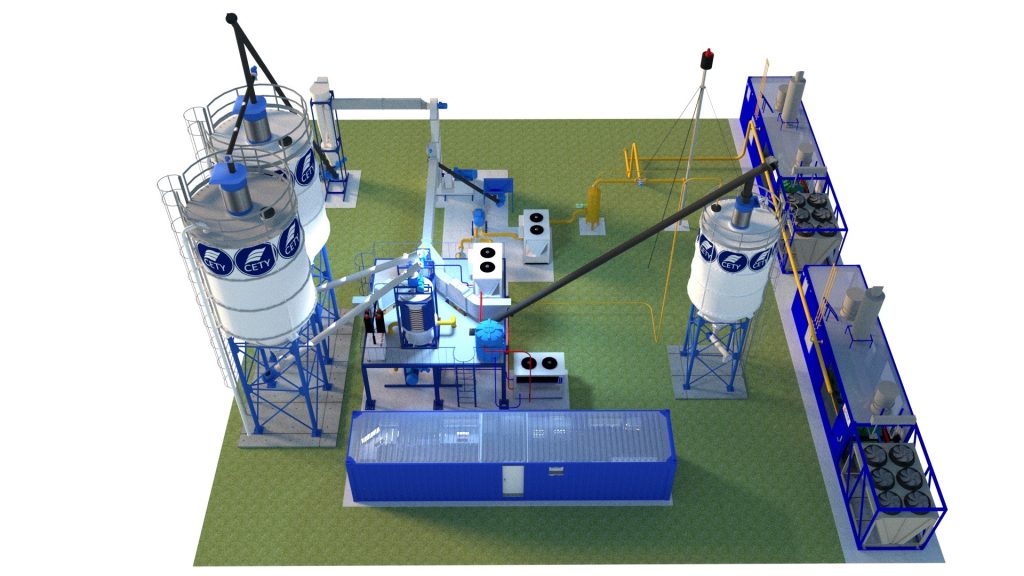
HTAP stands for high temperature ablative paralysis.
Our HTAP-5 and HTAP-10 were originally designed to be the next generation of pyralysis systems. They fix the shortcomings of other systems, using a flash system to eliminate the hard to handle and dispose of tars common to other pyrolysis systems. These systems reduce many waste streams containing complex hydrocarbon chains into Hydrogen, methane, and other Syngas components and into biochar to provide on site power immediately and to sell.
Endlessly Flexible
- Can handle various waste sources
- Syngas can be converted onsite into liquid hydrocarbons (dimethyl ether, methanol, methane), renewable hydrogen, and more
- Modular plug and play design that allows rapid and cheap installation and transport
Completely Green
- zero emission
- zero liquid residue discharge
- zero solid residue discharge
| Characteristic | HTAP-5 | HTAP-10 |
| Annual capacity (dry mass tons) | 5,250 | 10,500 |
| Syngas Production (% mass) | 70 – 95 | 70 – 95 |
| Biochar Production (% mass) | 5 – 30 | 5 – 30 |
| Synthetic fuel gas heating value (MJ/nm3) | 16 … 20 | 16 … 20 |
| Biochar heating value (MJ/nm3) | 25 | 25 |
| Annual Operation (hours) | 8,400 – 8,600 | 8,400 – 8,600 |
| Gross Electric Generation (kW) | 1,300 | 2,400 |
| Net Electric Generation (kW) | 1,000 | 1,800 |
| Scheduled Maintenance Interval (hours) | 4,000 | 4,000 |
| Scheduled Overhaul Interval (hours) | 60,000 | 60,000 |
cold start time minutes 45…60
operating temperature inside reactor (c) 900=970
cold start electric power requirements kw 200/300
Containerized/under the shed:
weight (kg) 16,200 / 15,700
length (mm): 12,200 / 9,350
width: 2,400 / 6,000
height: 8,000 / 8,000
HTAP-5/HTAP-10
HTAP stands for high temperature ablative paralysis.
Our HTAP-5 and HTAP-10 were originally designed to be the next generation of pyralysis systems. They fix the shortcomings of other systems, using a flash system to eliminate the hard to handle and dispose of tars common to other pyrolysis systems. These systems reduce many waste streams containing complex hydrocarbon chains into Hydrogen, methane, and other Syngas components and into biochar to provide on site power immediately and to sell.
Endlessly Flexible
- Can handle various waste sources
- Syngas can be converted onsite into liquid hydrocarbons (dimethyl ether, methanol, methane), renewable hydrogen, and more
- Modular plug and play design that allows rapid and cheap installation and transport
Completely Green
- zero emission
- zero liquid residue discharge
- zero solid residue discharge
| Characteristic | HTAP-5 | HTAP-10 |
| Annual capacity (dry mass tons) | 5,250 | 10,500 |
| Syngas Production (% mass) | 70 – 95 | 70 – 95 |
| Biochar Production (% mass) | 5 – 30 | 5 – 30 |
| Annual Operation (hours) | 8,400 – 8,600 | 8,400 – 8,600 |
| Gross Electric Generation (kW) | 1,300 | 2,400 |
| Net Electric Generation (kW) | 1,000 | 1,800 |
| Scheduled Maintenance Interval (hours) | 4,000 | 4,000 |
| Scheduled Overhaul Interval (hours) | 60,000 | 60,000 |